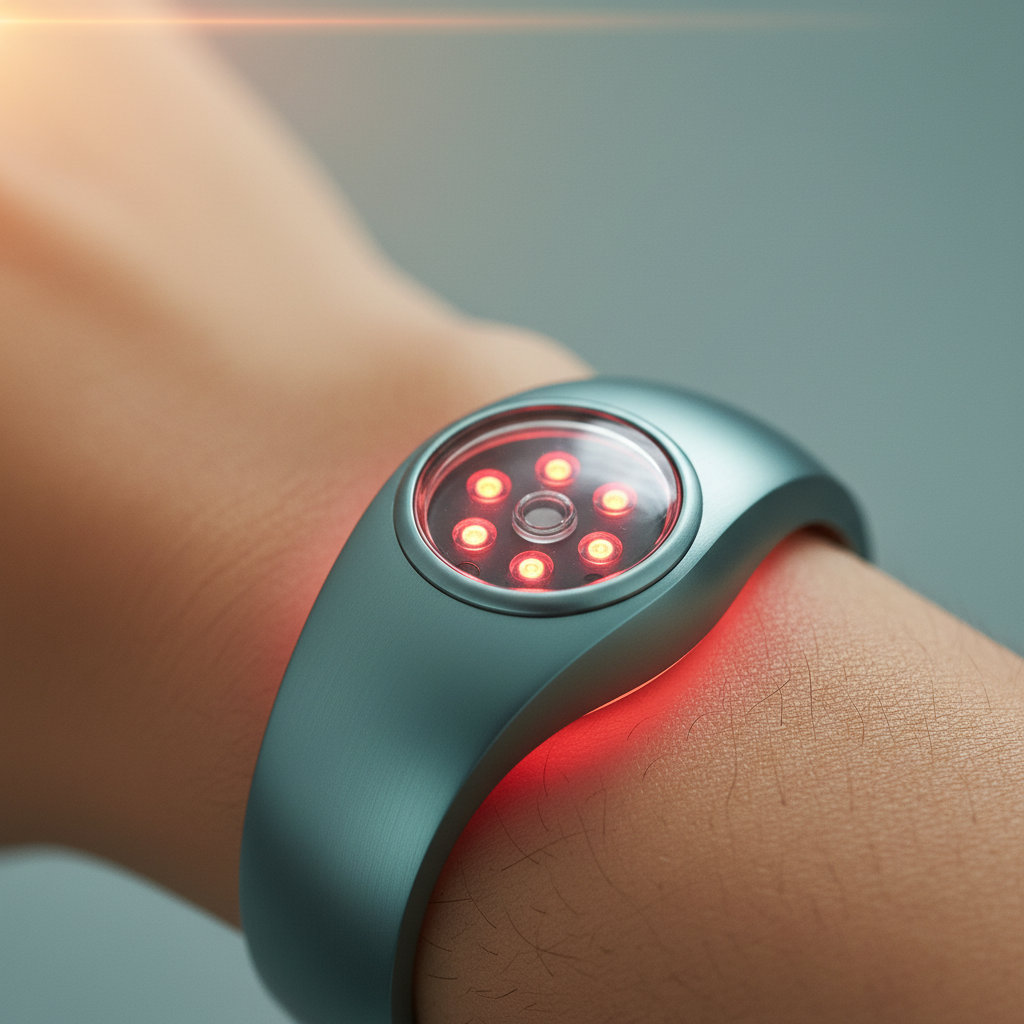
Why Static Calibration Fails in Production
Photoplethysmography-based glucose estimation relies on subtle changes in light absorption across multiple wavelengths as blood composition varies. Unlike pulse oximetry—which measures a stable ratiometric signal—glucose sensing contends with drift from temperature changes, contact pressure variation, skin tone differences, and sensor aging. A calibration curve derived in lab conditions degrades within hours of real-world use.
When building GlucoScan AI, we observed that a single-point fingerstick calibration yielded acceptable accuracy for roughly 90 minutes before mean absolute relative difference climbed above 15%. Tissue hydration, ambient temperature swings of just 3°C, and minor repositioning of the sensor all introduced systematic bias that a static model could not accommodate.
Continuous Calibration Architecture
A continuous calibration loop treats the sensor output as a dynamic system requiring periodic correction. The architecture consists of three components: a reference input mechanism, a drift estimator, and an adaptive correction layer that updates the inference model in real time.
Reference Input Strategies
The gold standard is periodic fingerstick glucose measurements, but asking users to prick their finger every two hours defeats the purpose of continuous monitoring. We explored three alternatives:
- Meal event tagging: Users log carbohydrate intake, and the system expects a glucose rise within 15–45 minutes. The predicted peak is compared against the PPG-derived estimate, and the error is used to adjust the calibration offset.
- Baseline anchoring: Fasting glucose in the morning is relatively stable. A single fingerstick at wake-up provides a known reference point, and the model applies a time-decaying confidence weight to that anchor throughout the day.
- Multi-sensor fusion: Combining PPG with galvanic skin response or temperature sensors provides additional constraints. A Kalman filter fuses these inputs, and the glucose estimate is one state variable in a larger physiological model.
In production, we use a hybrid: users provide one fingerstick reference per session (typically upon waking), and meal tags serve as soft constraints. The system does not trust meal tags absolutely but uses them to detect gross drift.
Drift Estimation via Recursive Least Squares
We model sensor drift as a slowly varying additive offset plus a multiplicative gain error. Every time a reference measurement arrives, we update the calibration parameters using recursive least squares with exponential forgetting. The forgetting factor λ is set to 0.98, meaning older calibration points lose influence over roughly 50 samples.
The update equation is:
θ(k) = θ(k-1) + P(k) * x(k) * (y_ref(k) - x(k)^T * θ(k-1))
P(k) = (P(k-1) - P(k-1)*x(k)*x(k)^T*P(k-1) / (λ + x(k)^T*P(k-1)*x(k))) / λ
where θ is the parameter vector (offset and gain), x(k) is the feature vector from the PPG signal, and y_ref(k) is the reference glucose value. This runs in under 2ms on an iPhone 12, making it suitable for real-time updates.
Adaptive Correction Layer
The calibration parameters feed into a correction layer that sits between the raw PPG feature extractor and the glucose regression model. This layer applies:
glucose_corrected = gain * glucose_raw + offset
The regression model itself remains frozen after initial training. Only the correction layer updates continuously. This separation prevents catastrophic forgetting and ensures that the core model's learned representations stay intact.
Handling Calibration Ambiguity
Not all calibration inputs are equally trustworthy. A fingerstick taken immediately after exercise may be elevated due to glycogen mobilization, not dietary glucose. A meal tag logged 10 minutes after eating may not yet have caused a measurable glucose rise.
We assign a confidence score to each calibration event based on:
- Time since last physical activity (detected via accelerometer)
- Signal quality metrics: perfusion index, signal-to-noise ratio, motion artifact level
- Consistency with recent trend: if the reference value deviates more than 40 mg/dL from the predicted trajectory, confidence is reduced
Calibration updates are weighted by this confidence score. Low-confidence events contribute minimally to the RLS update, preventing a single outlier from destabilizing the model.
Temperature Compensation
Skin temperature affects hemoglobin absorption spectra. A 2°C drop in finger temperature can shift the PPG baseline by 5–8%, which translates to a 15 mg/dL error in glucose estimation. We use a thermistor embedded in the sensor housing to measure skin temperature every 10 seconds.
The correction is applied as a piecewise linear function:
offset_temp = -2.1 * (T_skin - 32.0) // mg/dL per °C deviation from 32°C nominal
This temperature offset is added to the drift-compensated offset before the final correction is applied. In testing across a 28–36°C range, temperature compensation reduced mean absolute error by 11%.
Latency and User Experience
Calibration updates must not cause jarring discontinuities in the displayed glucose value. When a new reference arrives, we apply the correction gradually over 60 seconds using a critically damped second-order filter. The displayed value smoothly converges to the corrected estimate without sudden jumps.
From a UX perspective, users see a small calibration icon when a reference input is processed, and the app displays a confidence interval around the glucose estimate. The interval width reflects the time since the last high-confidence calibration: it starts at ±8 mg/dL immediately after a fingerstick and grows to ±18 mg/dL after four hours.
Edge Cases and Failure Modes
Continuous calibration can fail in several ways:
- Insufficient reference data: If a user provides no fingerstick for 12+ hours, the system reverts to a population-average calibration and widens the confidence interval to ±25 mg/dL.
- Contradictory inputs: If two consecutive fingersticks 30 minutes apart differ by more than 50 mg/dL and the PPG signal shows stable amplitude, we flag a potential sensor placement issue and prompt the user to reposition the device.
- Thermal shock: Rapid temperature changes (e.g., moving from indoors to freezing outdoor air) can cause transient artifacts. We detect this via a temperature rate-of-change threshold (>1°C per minute) and temporarily freeze calibration updates until the signal stabilizes.
Validation and Accuracy
In a 30-day field trial with 47 participants, continuous calibration reduced mean absolute relative difference from 18.3% (static calibration) to 12.1%. The improvement was most pronounced in the hypoglycemic range (